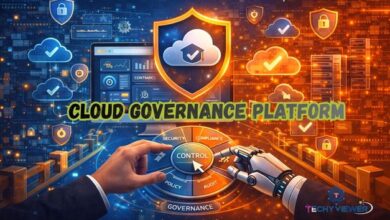
How DevX Self-Service with Guardrails Enables Safe and Scalable Deployments

The software development teams at present are always under pressure to innovate faster and scale effectively. However, when innovation happens faster without control, it may lead to security loopholes and stability issues. This is where the idea of DevX Self-Service with Guardrails becomes a game-changer.
The issue that will be discussed in this article is how the DevX self-service platforms with guardrails can help in achieving a balance between innovation and control to offer a safe and scalable environment for deployment without any bottlenecks.
Understanding DevX Self-Service with Guardrails
DevX (Developer Experience) Self-Service: This pertains to the platforms and processes that allow developers to provision infrastructure, deploy applications, and access tools and environments on their own without having to go through the operations teams for every single request.
But too much freedom without any kind of oversight can sometimes be a source of risk. That is where guardrails come into play.
Guardrails: These are the policies, automation, and security that are defined and built into the system. They make sure that while the developers are moving fast, they are doing so within the organizational standards that have been approved.
It is like giving the developers a sports car and also setting up speed limits, lane markers, and safety features.
Also Read: What Are the Best AI Marketing Tools for 2026? Top 15+ Picks
Why Organizations Need Guardrailed Self-Service
With the adoption of cloud-native technologies, microservices, and distributed systems, the complexity of deployment is expected to escalate. The traditional approach of approvals will hamper innovation.On the other hand, unchecked self-service could result in the following:
- Misconfigured cloud infrastructure
- Security threats
- Non-compliance
- Cost overruns
- Inconsistent environments
DevX self-service with guardrails is the solution to this problem.
Core Components of DevX Self-Service with Guardrails
Infrastructure as Code (IaC) Templates
Pre-approved infrastructure templates guarantee that the environments created by the developers are standardized, secure, and compliant. The templates should contain the following:
- Network policies pre-configured
- Encryption enabled by default
- Logging and monitoring integration
- Role-based access control
- This helps to eliminate configuration drift.
Policy-as-Code Enforcement
Policy-as-Code frameworks enable automatic validation of deployments against organizational policies. Prior to the deployment of any infrastructure or application, the following are automatically validated:
- Security best practices are adhered to
- Compliance policies are met
- Resource utilization remains within budget limits
- Instead of manual reviews, compliance becomes automated and scalable.
Automated CI/CD Pipelines
The integrated CI/CD pipelines provide security scanning, testing, and validation for compliance as part of the deployment process. This is done through:
- Static code analysis
- Vulnerability scanning
- Dependency checks
- Automated test suites
This is done through left-shifted governance.
Role-Based Access Control (RBAC)
Self-service does not imply free access. Role-based permissions ensure that:
- Developers can deploy within specified environments
- Production environments are safeguarded with additional security
- Administrative rights are constrained and monitored
This will ensure that there is no misuse of resources accidentally or maliciously.
Observability and Monitoring Built-In
Guardrails also extend beyond the deployment phase. Continuous monitoring ensures that:
- There is real-time visibility into application performance.
- Alerting for anomalies.
- Automatic remediation for policy violations.
This creates a feedback loop that enhances operational stability.
Also Read: How to Integrate AI Chatbots into Your Website Without Slowing Down Load Times
How Guardrails Facilitate Safe Deployments
Safe deployments in today’s world are all about proactive prevention and not reactive measures. Guardrails provide:
✅ Standardization
This helps reduce human error and discrepancies in the configuration.
✅ Automated Compliance
The regulatory requirements are defined in the system, and as such, all deployments are automatically regulatory compliant.
✅ Security by Default
Encryption, network segmentation, and identity services are designed in by default.
✅ Reduced Human Error
Human processes are removed through automation, thereby reducing the chances of human error due to a lack of awareness or a lack of communication.
How Self-Service Drives Scalability
However, scalability involves the elimination of bottlenecks while ensuring reliability. The following are the ways in which DevX self-service enhances scalability:
🚀 Faster Provisioning
Developers do not have to wait for days or weeks to get infrastructure approval. Environments are provisioned in minutes.
🚀 Reduced Operational Load
Platform teams can focus on building and improving systems instead of handling tickets.
🚀 Consistent Multi-Environment Deployments
Consistency in processes helps ensure predictable behavior for development, staging, and production environments.
🚀 Cost Optimization
Guardrails can be applied to enforce budget constraints, auto-scaling rules, and resource tags to ensure that there is no uncontrolled cloud spend.
The Cultural Impact: Empowerment with Accountability
DevX self-service with guardrails is more than a technology change; it’s a cultural shift.
It encourages:
- Developer ownership
- Cross-functional collaboration
- Shared responsibility for security
- Faster innovation cycles
When developers are empowered in a structured manner, productivity goes up without sacrificing governance.
Also Read : Why IEC Power Cords Are Essential for Data Centres
Common Challenges and How to Overcome Them
Too Restrictive Guardrails
Too restrictive guardrails can be innovation blockers. The solution is feedback refinement.
Poor Developer Experience
Poor portals or workflows will result in low adoption rates. Developer platforms should prioritize ease of use and documentation.
Lack of Visibility
Insufficient dashboards and reporting will result in a lack of governance visibility for leadership. Observability platforms can solve this problem.
Resistance to Change
Developers who are used to doing things by hand might resist. Leadership needs to communicate the value of change and train them.
Best Practices for Delivering DevX Self-Service with Guardrails
- Start with a strong governance foundation
- Employ Policy-as-Code for automating policies
- Create infrastructure templates that are reusable
- Integrate security scanning into CI/CD pipelines
- Support real-time dashboards and reporting
- Gather feedback from developers on a continuous basis
- Evolve guardrails over time
The secret to success is ensuring alignment between platform engineers, security, compliance, and developers.
Real-World Business Outcomes
Organizations that adopt DevX self-service with guardrails will achieve the following:
- 40-60% faster deployment cycles
- Fewer security incidents
- Improved compliance posture
- Reduced operational overhead
- Improved developer satisfaction
- Improved scalability in regions and teams
By removing bottlenecks and ensuring that standards are maintained, organizations can achieve agility and stability.
The Future of Safe and Scalable Deployments
With the increasing complexity of cloud infrastructure, the future will not be about manual governance by humans. The future will be about intelligent automation, where compliance, security, and scalability will all be built into the platform.
The future is about DevX self-service with guardrails. This brings speed and structure, innovation and oversight, and autonomy and accountability together.
The future belongs to those organizations that will be able to:
- Scale globally
- Comply with regulations
- Innovate quickly
- Achieve operational excellence
Also Read: How to Migrate from HubSpot to Salesforce CRM: A Step-by-Step Guide?
Conclusion
DevX Self-Service with Guardrails is not about controlling developers; it is about empowering them. By integrating policy, automation, and security into the deployment pipeline, organizations can create a system in which speed and safety can coexist.
In today’s competitive digital world, the ability to move quickly without sacrificing standards is a huge competitive advantage. Guardrailed self-service platforms provide the roadmap to a safe, scalable, and sustainable growth path.
This can help move the deployment process from a risk area to a growth driver.